Understanding high blood pressure: what the numbers mean
What a blood pressure reading means, why high blood pressure often has no symptoms, and why one reading is rarely the whole story.
- Published by
- Tibacare Admin
- How this was made
- Drafted with AI assistance. Checked against its sources and approved for publication by Tibacare.
- Published
- Reading time
- About 5 minutes (estimate)
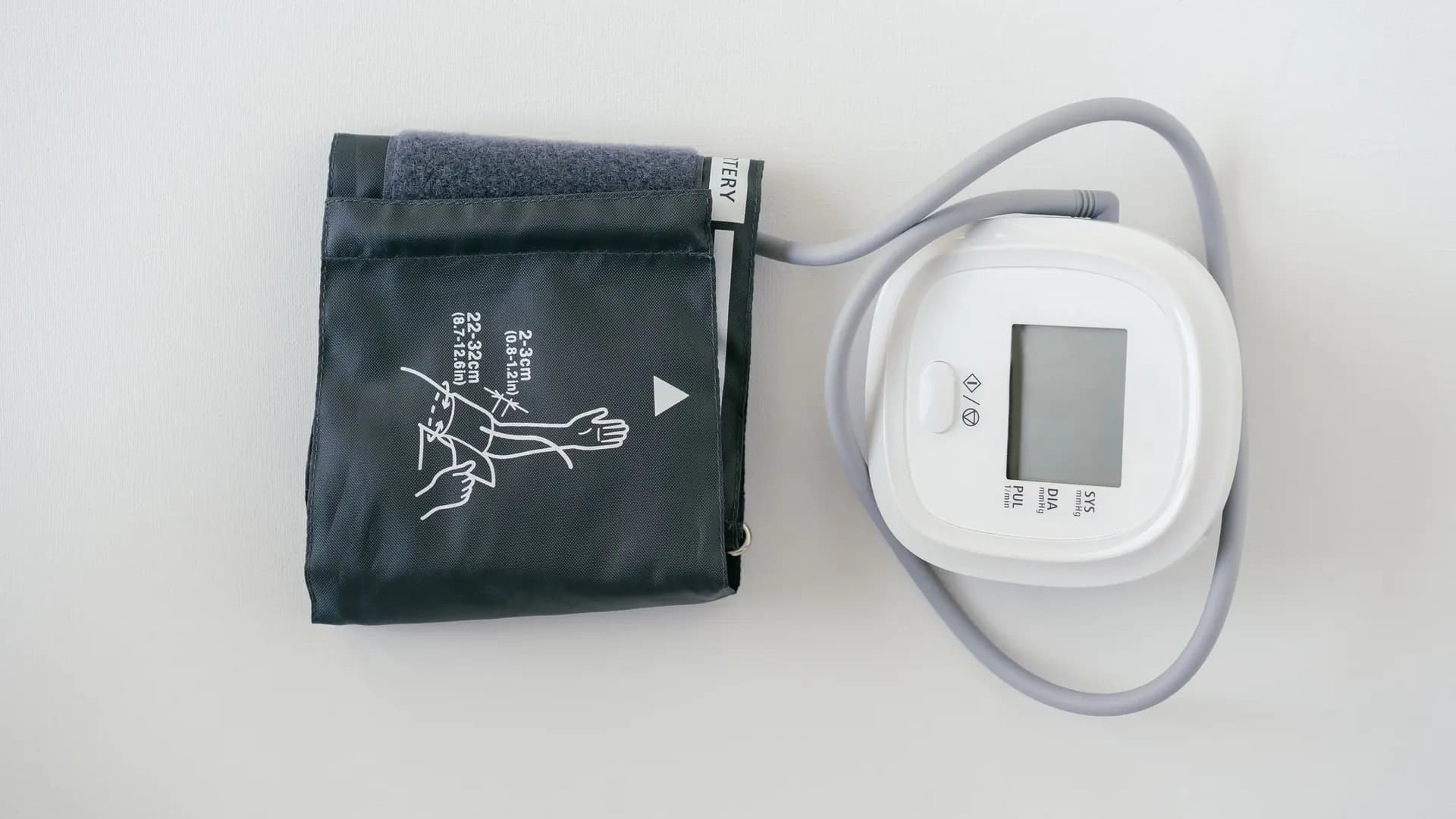
What blood pressure is
Each time your heart beats, it pushes blood through your arteries. Blood pressure is the force of that blood pressing against the artery walls. It rises and falls naturally through the day, for example with activity, stress or even the act of having it measured.
High blood pressure, also called hypertension, means the pressure stays higher than it should over time. Over months and years, that extra pressure can strain the heart, blood vessels, brain, kidneys and eyes.
What the two numbers mean
A reading is written as two numbers, such as 130/80. Both are measured in millimetres of mercury (mmHg).
- The first, higher number is the systolic pressure: the pressure in your arteries when your heart beats.
- The second, lower number is the diastolic pressure: the pressure when your heart rests between beats.
Both numbers matter. A reading can be raised because of either one, or both.
What do the two numbers mean?
Example reading
130/80
mmHg
Systolic: the first, higher numberThe pressure in your arteries when your heart beats.
Diastolic: the second, lower numberThe pressure when your heart rests between beats.
mmHgMillimetres of mercury, the unit both numbers are measured in.
When a reading counts as high
Guidance on these numbers differs between countries and organisations. The figures below show how some of them describe high blood pressure. They are not targets for you, and they are not a diagnosis.
The World Health Organization (WHO) describes hypertension as blood pressure of 140/90 mmHg or higher. It says the diagnosis is made when readings taken on two different days are at or above that level.
In the UK, the NHS uses the same 140/90 figure for readings taken by a healthcare professional, and a lower figure, 135/85, for readings taken at home. For some people, readings taken in a clinic are higher than their readings at home, which is sometimes called the “white-coat effect”.
In the United States, the American Heart Association places the start of high blood pressure at a lower level, from 130 systolic or 80 diastolic. Because the numbers vary, ask a clinician what your readings mean where you live.
Why you might feel nothing at all
Most people with high blood pressure have no symptoms. It is often found only when someone has their blood pressure checked, for example at a routine appointment or a pharmacy. The only way to know your blood pressure is to have it measured.
Very high blood pressure, which WHO describes as usually 180/120 mmHg or higher, can sometimes cause symptoms, such as a severe headache, chest pain, difficulty breathing, dizziness, blurred vision or confusion.
Why one reading is not a diagnosis
A single raised reading does not, on its own, mean you have high blood pressure. Blood pressure changes from minute to minute, and a reading can be higher if you have rushed to an appointment, feel anxious or are in pain.
That is why health professionals usually look at several readings before deciding whether blood pressure is high. In the UK, for example, you might be asked to:
- check your blood pressure at home over several days with a home monitor
- come back for another reading a few days or weeks later
- wear a small portable monitor that takes readings over 24 hours
The approach differs between countries and clinics, but the principle is the same: a diagnosis rests on a pattern of readings, not a single number.
Getting a reliable reading
A calm, comfortable room
A relaxed setting that is neither too hot nor too cold.
Sit quietly
Be seated, and stay quiet while the reading is taken.
Support your arm
Keep your arm outstretched and supported.
A cuff that fits
Use a cuff that is the right size for your arm.
Why assessment and ongoing care matter
Untreated high blood pressure raises the risk of serious problems, including heart attack, stroke, heart failure and kidney disease. Finding it early gives time to lower that risk, and even a small reduction in blood pressure can help.
A clinician looks at your readings alongside other things that affect your health, such as your age, family history and conditions like diabetes or kidney disease. Depending on the overall picture, they may suggest lifestyle changes, regular monitoring, medicine, or a combination. Decisions about treatment are made with your clinician, not from a single number.
Many of the things that help are part of everyday life: eating less salt, being more active, limiting alcohol and not smoking. A clinician can explain which matter most for you.
Questions to ask your clinician
- What do my readings mean, and how many readings is that based on?
- Should I check my blood pressure at home, and how should I do it?
- Does my blood pressure need treatment, or should we keep monitoring it for now?
- Are there other health factors that change what my readings mean for me?
- How often should my blood pressure be checked?
- Which readings or symptoms should make me seek help sooner?
Sources
- Hypertension (fact sheet, 25 September 2025) — World Health Organization (who.int). Accessed 24 October 2026.
- High blood pressure (page last reviewed 19 July 2024) — NHS (nhs.uk). Accessed 24 October 2026.
- Hypertension in adults: diagnosis and management (NG136, last updated 26 February 2026) — National Institute for Health and Care Excellence (NICE) (nice.org.uk). Accessed 24 October 2026.
- Understanding Blood Pressure Readings (last reviewed 14 August 2025) — American Heart Association (heart.org). Accessed 24 October 2026.
General information
This article is for general health and lifestyle information only. It is not medical advice, diagnosis or treatment. For personal health concerns, speak with a qualified healthcare professional.